Henri Coanda Airport - Redesign
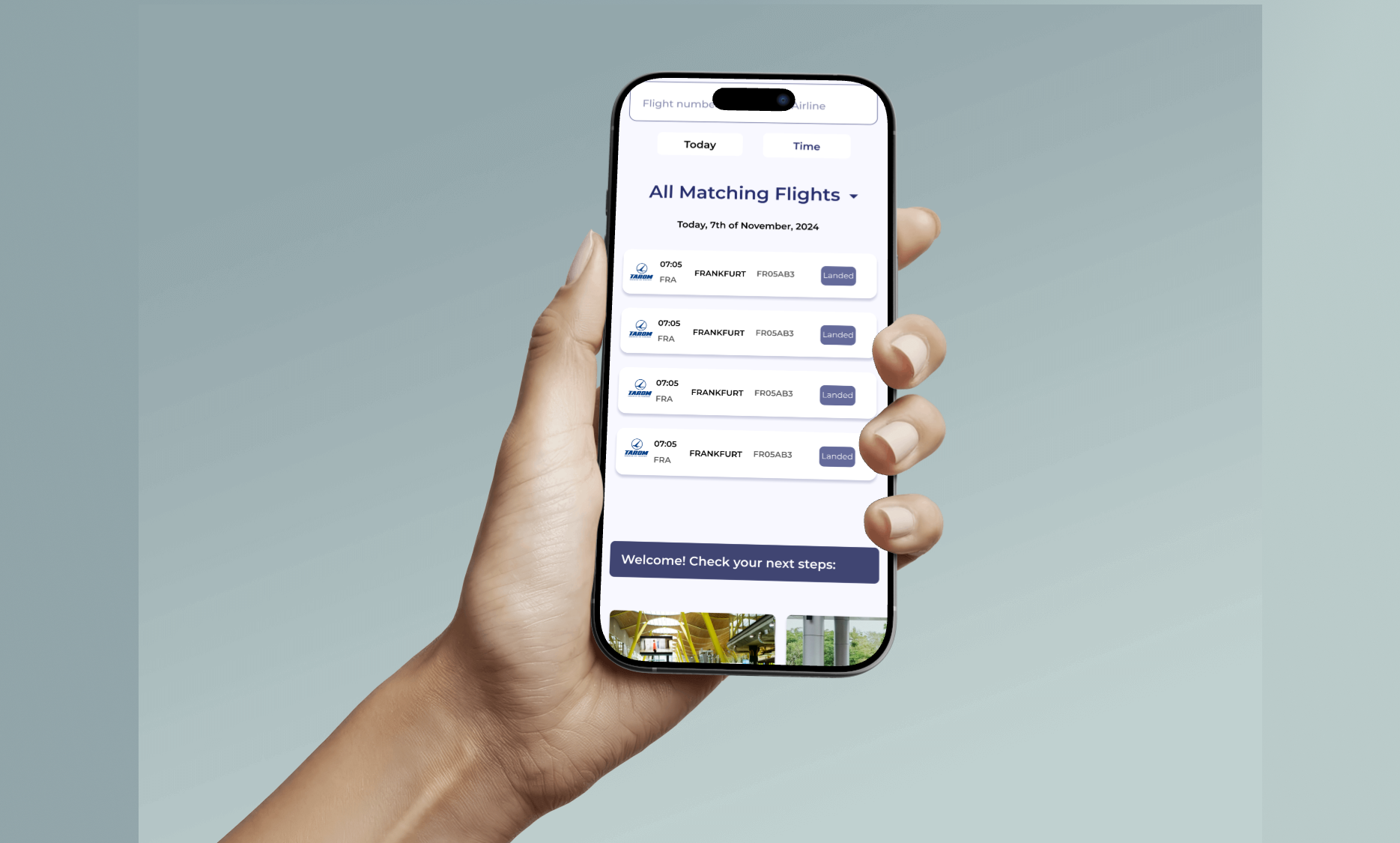
Elevating the Traveler Experience: UX Redesign for "Henri Coandă" Airport to Decrease User Stress and Improve Flight Information Access
Duration: Sep 2024 - Dec 2024
Industry: Career Tech
Role: UI/UX Designer
Tools: Figma, ClickUp
Henri Coanda is the main International Airport in Romania, located in Otopeni, near Bucharest, the capital city.
It is the busiest airport in the country, reaching its peak in 2023 with over 14 million visitors and passengers. Approximately 32 aircraft operate regular flights at this airport, both domestic and international.
How might we reorganise the airport's digital information so that passengers can find their critical flight status and location details efficiently?
Problem
Users experience difficulty in finding essential information about flights due to multiple links and sections available at the same time.
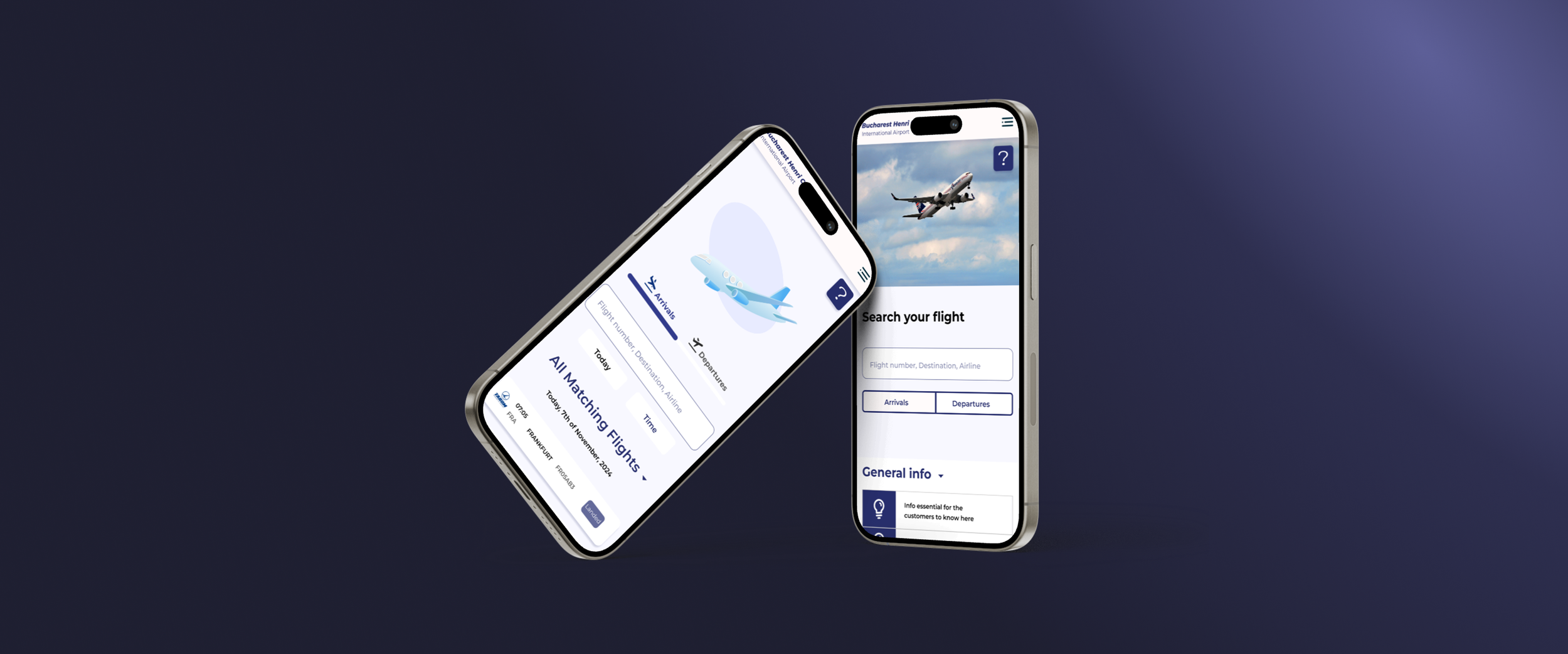
The solution provides a digital experience grounded in minimalism and a priority-focused Information Architecture. This approach reduces information overload through clarity and fluidity. The scope is to decrease passenger stress and provide easily available, essential airport-related information.
Solution
Research Phase: User’s Perspective
(Survey)
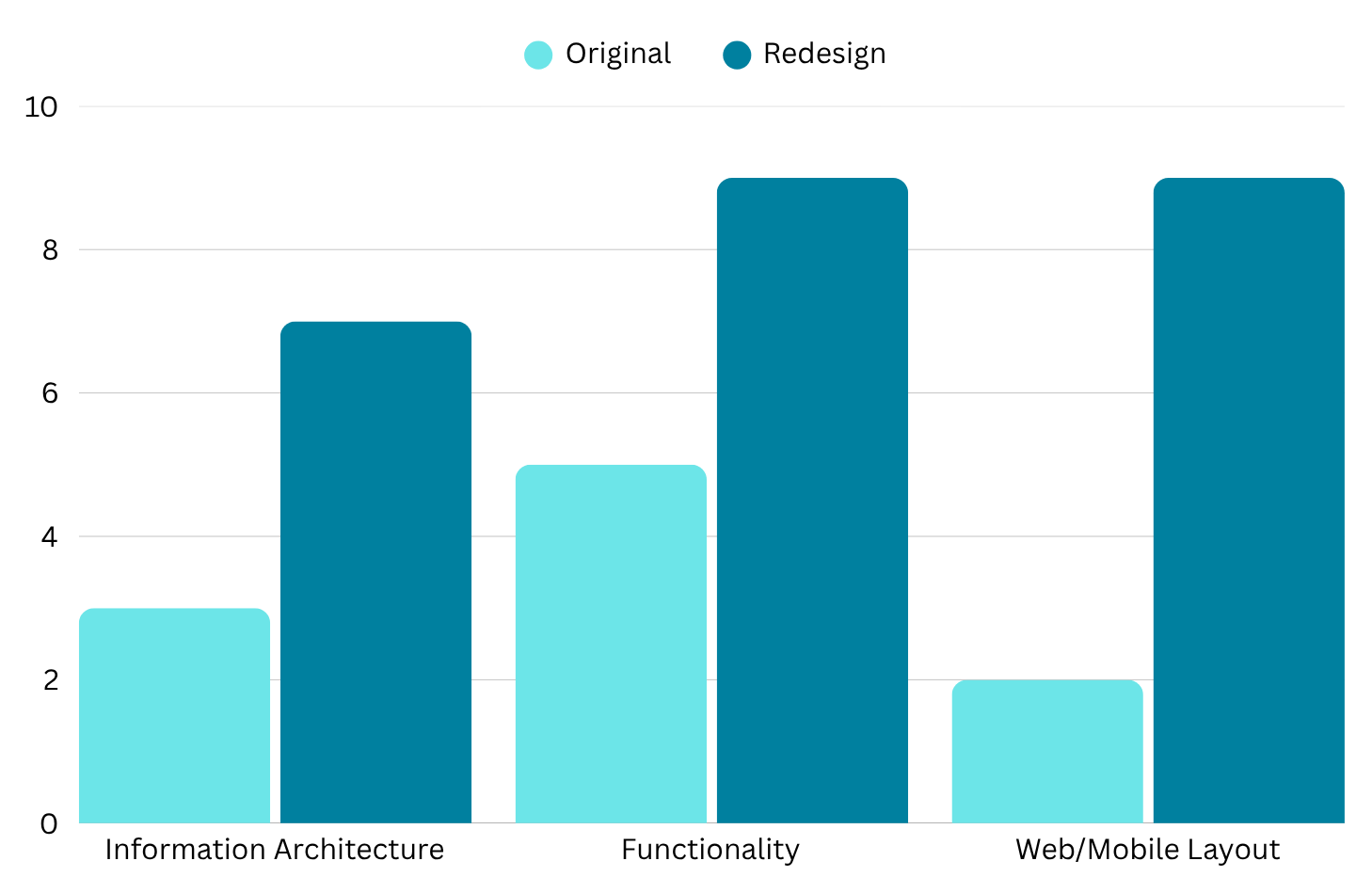
In order to understand user’s experience and perception on the current Henri coanda Airport app I conducted a survey with both individuals who had previous encounters with the app as well as users who are unfamiliar with the interface.
01 Information Architecture
Focus: Prioritising Essential Data. The research showed that users ' journeys mostly revolve around one high-stakes task (finding the flight status together with additional details that could be relevant). The current design is overcrowded, with lower sustainability rates.
My designs aim at providing airport visitors with a clean, priority-driven information architecture.
02 Mobile Adaptability
Supportive Design: Users, operating under peak travel stress, need a minimalist and predictable layout. The design should focus on mobile functionality and readability in order to reduce cognitive load.
03 Functionality
Functional Reliability is the MVP. The core value lies in the real-time accuracy and performance of flight data. Design decisions must always serve function first.
Iteration and Optimization
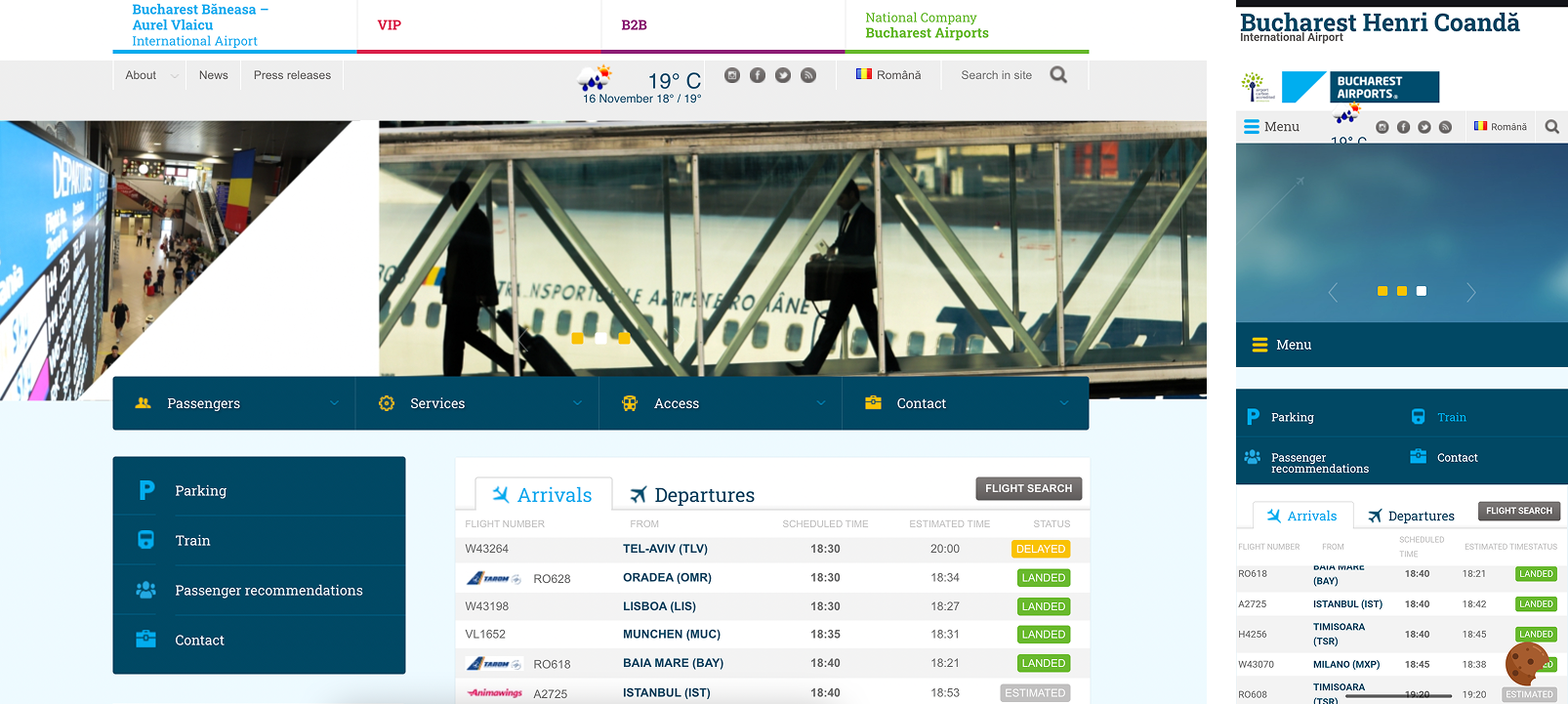
Original Site
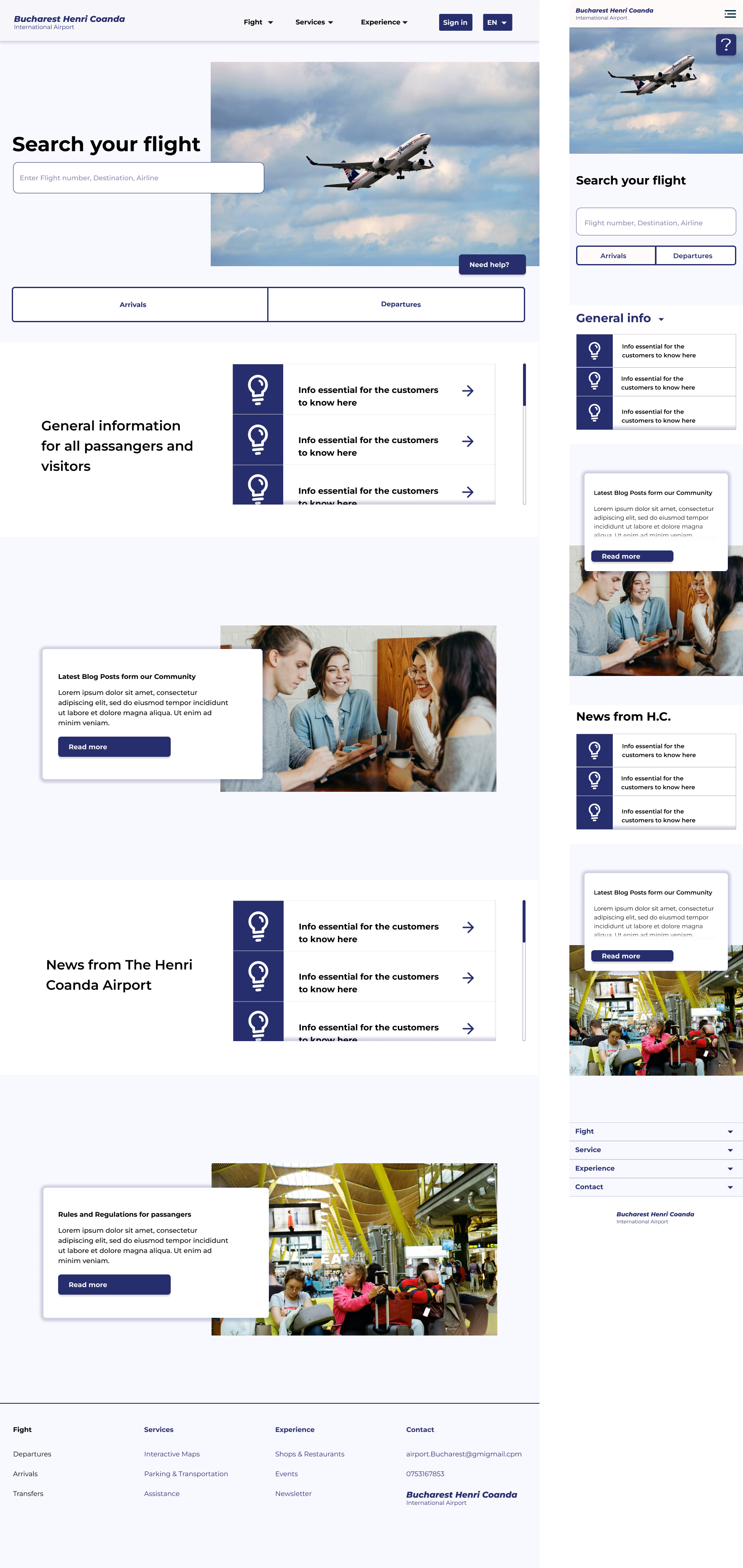
High Cognitive Load & Information Overload. The original design lacked a clear information hierarchy, forcing users to navigate through excessive links and unprioritized content to find critical flight status. This resulted in significant user stress and a longer time to complete essential tasks.
Optimized Version
Priority-Driven IA & Minimalist Clarity. I iterated, focused on real-time flight search as the primary element. By streamlining the architecture, the path to critical information (status, gate) was reduced. This intervention directly supports our goal of reducing stress and promoting faster task completion.
The Final Design
(The Current Status)


My Learnings
(Learnt Skills and Strategies)
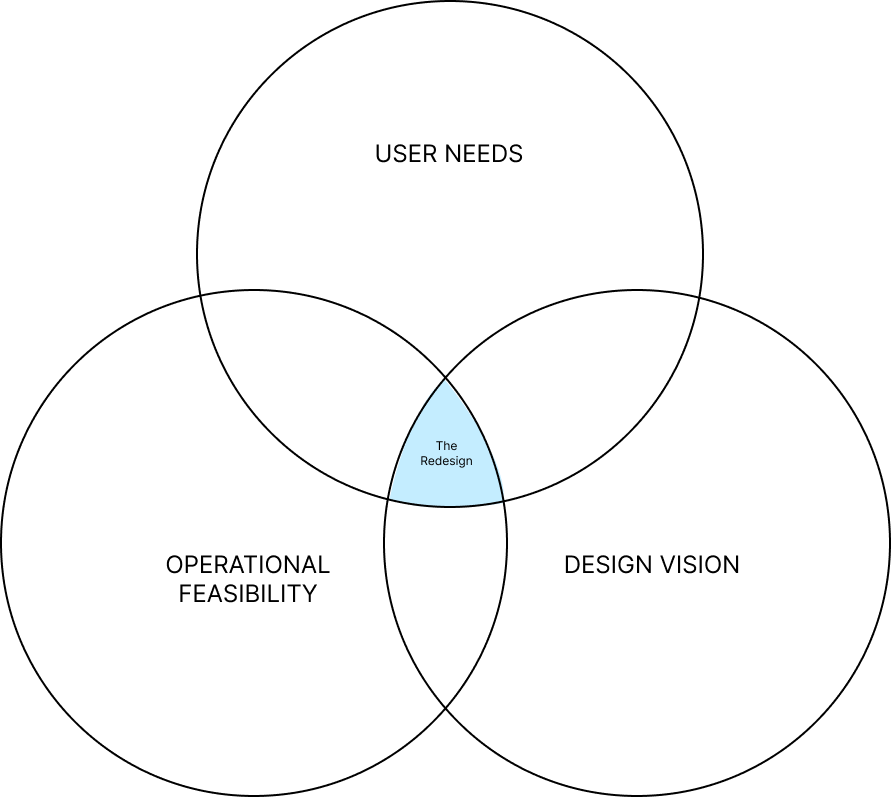
Success is defined not by aesthetics or visually overstimulating IA, but by the prioritisation of information.
Prioritisation of Functions
Through this project, I learned that user-centred design in the context of critical public services (like an airport) fundamentally shifts focus. Success is defined not by aesthetics or supplementary visuals, but by the ruthless prioritisation of information and efficient delivery of core functionality. Our commitment to a minimalist, fluid interface was a direct response to this finding, proving that clarity is the ultimate form of customer service in high-stakes environments.
Future Developments
Full Usability Validation & MVP Rollout - Develop fully interactive prototypes for high-fidelity testing on real traveller demographics. The goal is to obtain quantitative feedback on core KPIs.
Style Guide
Typography


Colour Palette
