Miles - Crisis Support App
Building Trust and Accessibility: UX/UI Design of a Mission-Critical Digital Platform for Dutch Mental Health Crisis Intervention App (Miles Project)
About
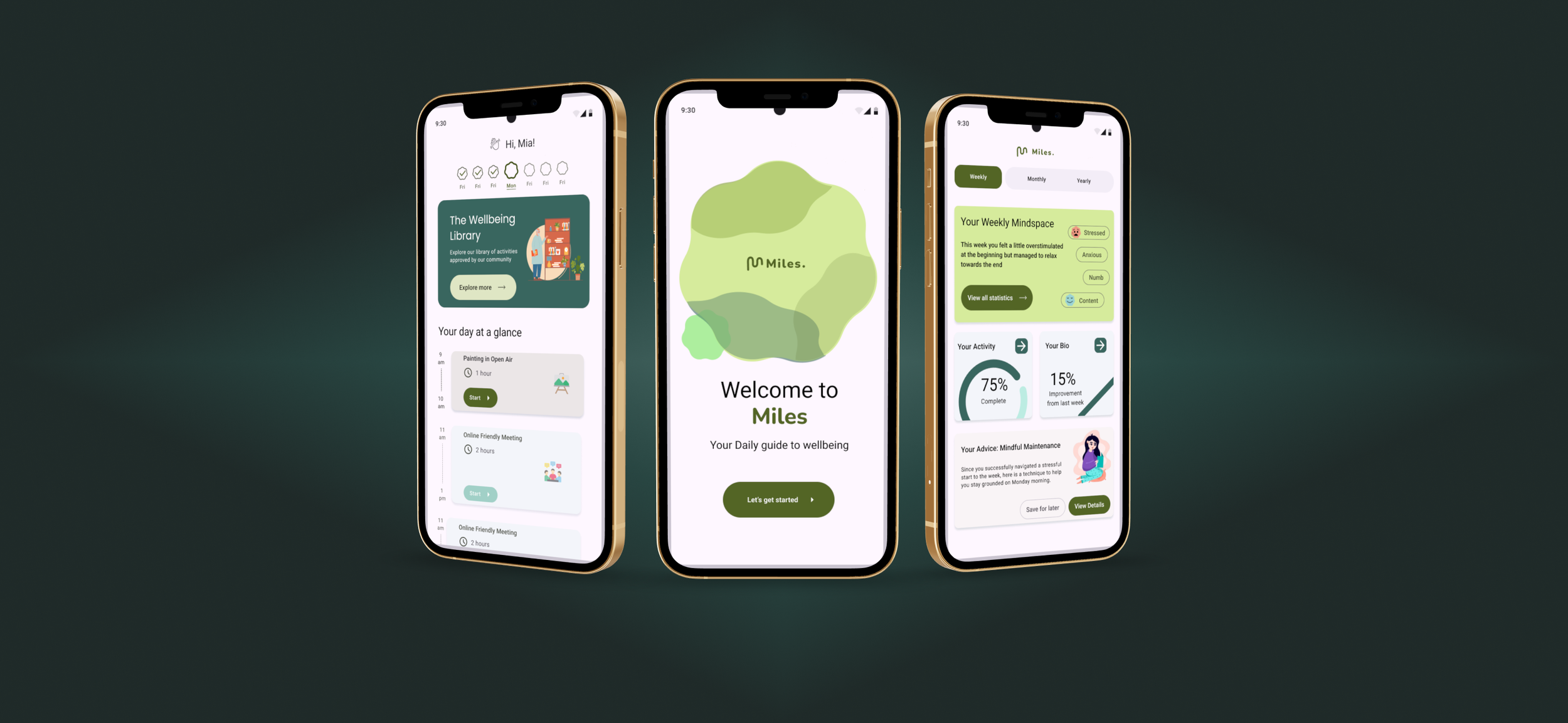
This project involved the UX/UI design of a new mission-critical platform for mental health crisis intervention, commissioned by Stichting Bestaanskracht (creators of the Miles application).
The Existing Ecosystem: The Miles system successfully provides ongoing tracking and support for individuals with existing mental deficiencies via Samsung Galaxy smartwatches for patients and companion mobile apps for caregivers.
The New Challenge: The client's mandate was to strategically extend this digital service to a new, vulnerable demographic: outpatients (individuals outside formal mental care facilities). This required designing an application capable of providing immediate, accessible digital safety planning.
Technical Constraints: The solution had to integrate seamlessly into the existing Miles ecosystem, demanding dual design solutions for Samsung Galaxy smartwatches and mobile devices for both the user and their mental health professionals.
Duration: March 2024 - June 2024
Role: UI/UX Designer
Industry: eHealth
Tools: Figma
How might we design the immediate smartwatch interface to be so clear and focused that it prevents emergencies through accessible grounding techniques, while providing a fluid, secure channel for open communication with their support network?
Problem
Individuals experiencing a profound mental health crisis are often in a state of overwhelming distress. This emotional detachment blocks their ability to reach out or utilise existing resources.
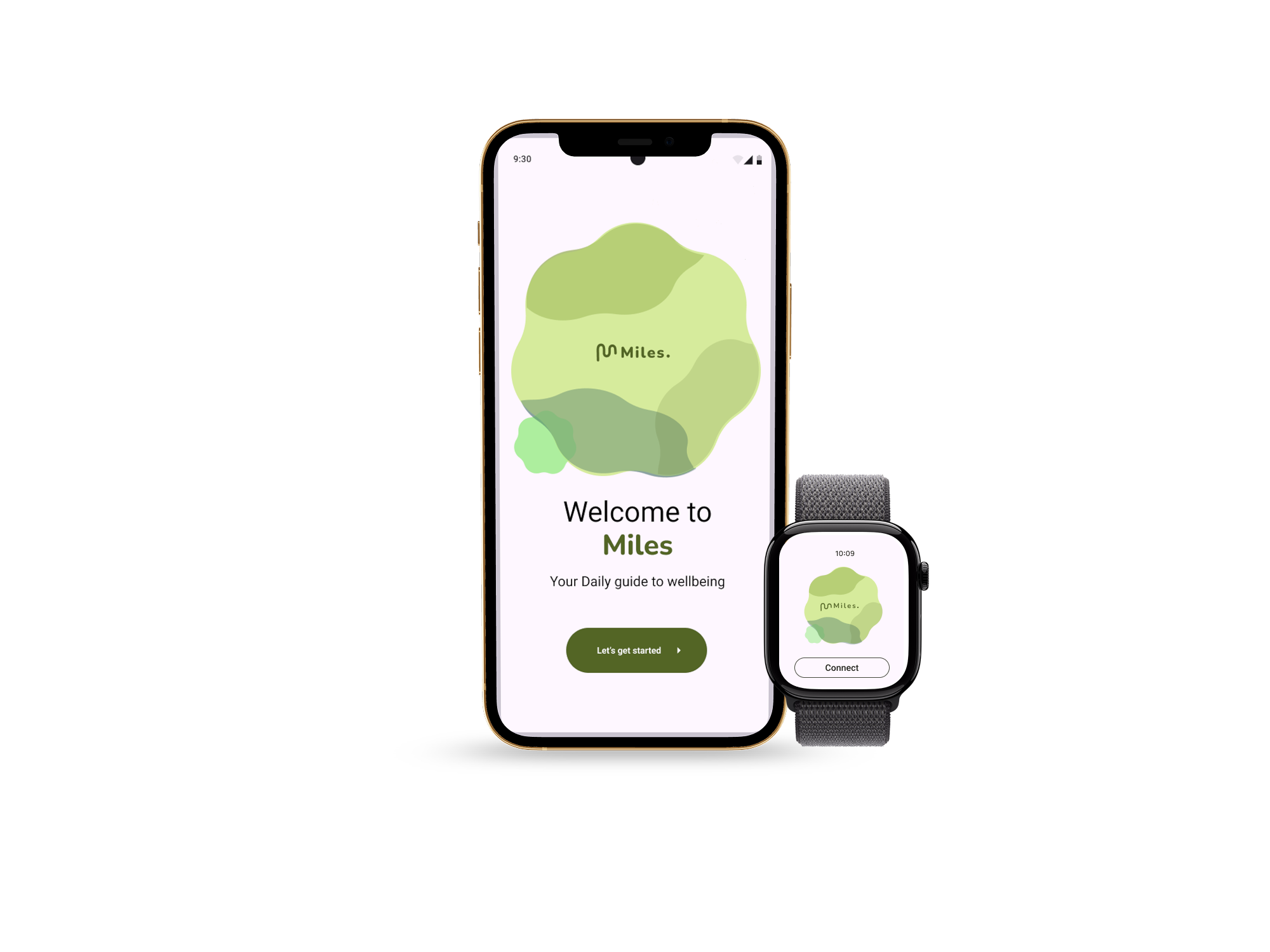
We need to design a solution by implementing grounding techniques to immediately restore awareness and simultaneously provide a secure, fluid channel for open communication with caregivers and professionals.
Solution
Research Phase: Understand the user and their needs

(Expert Interview)
Primary research included in-depth interviews with mental health experts who have direct experience supporting patients in crisis. This commitment ensured every design decision is grounded in clinical insights and real-life crisis protocols.
01 Crisis Plan
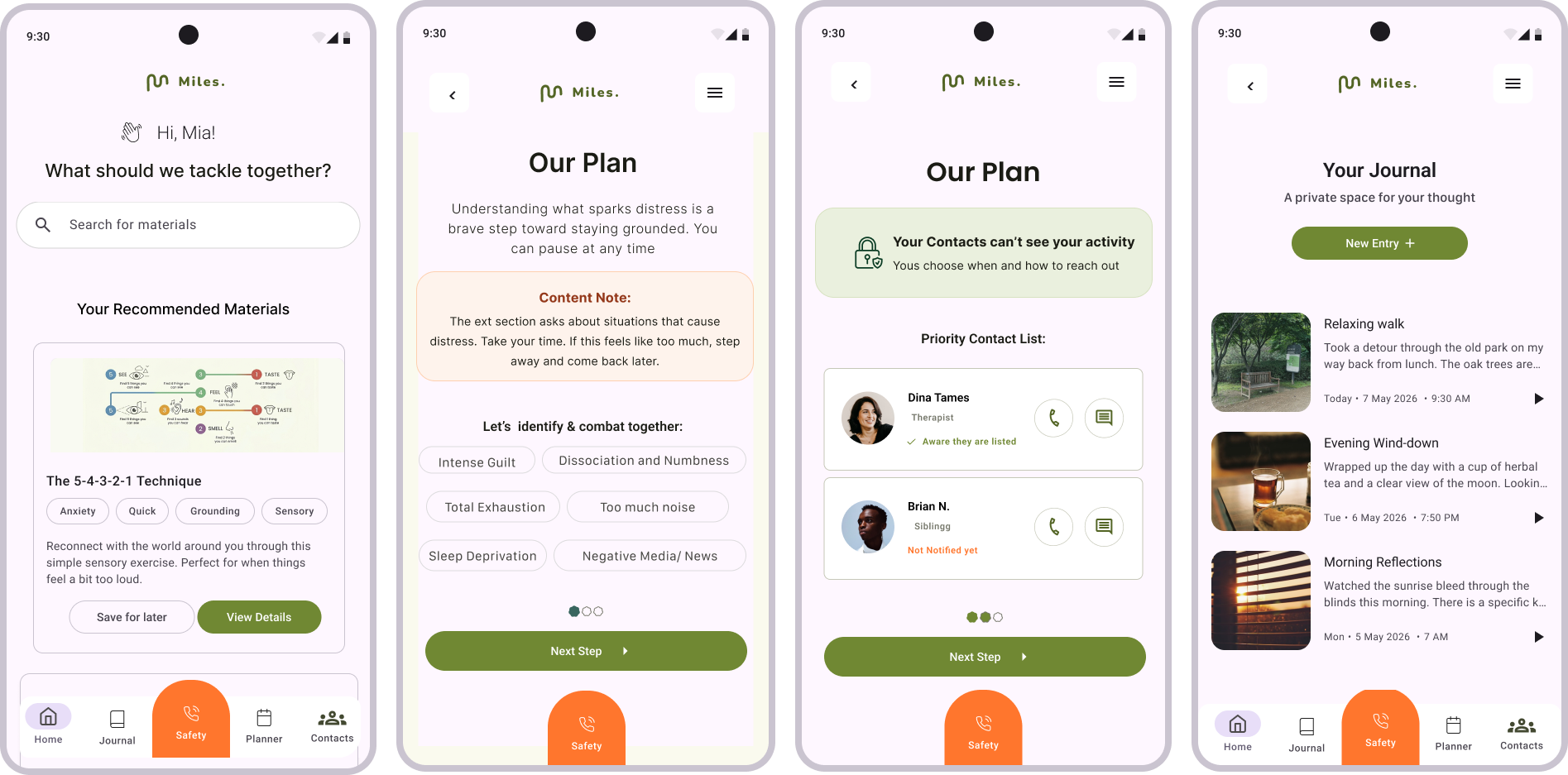
Personalised Crisis Architecture. The app should provide a prominent, dynamic safety plan tailored to the individual. The IA must make the plan the priority, treating it as the user's digital lifeline by helping them gain control over adverse feelings and thoughts.
02 Communication Channel
Fluid, Secure and trust-focused Channel. The design must prioritise the creation of a secure, open communication path to professional/caregiver contact. Recognising that users are under extreme duress, the interface must be highly reliable and easy to initiate. The primary design objective for this channel is to ensure the client feels heard and supported through active listening elements and high-security protocols, directly supporting recovery.
03 Independence
Tracking by respecting autonomy. While tracking is essential, the patient's app should empower self-management and offer a sense of agency and independence, with communication and professional/caregiver intervention as forms of support, not control.
04 Grounding Techniques
Immediate Awareness Intervention. The design must provide accessible grounding tools that require minimal cognitive load. The interface must be clean, and the techniques included anchor the user to reality and build awareness.
The Initial Design
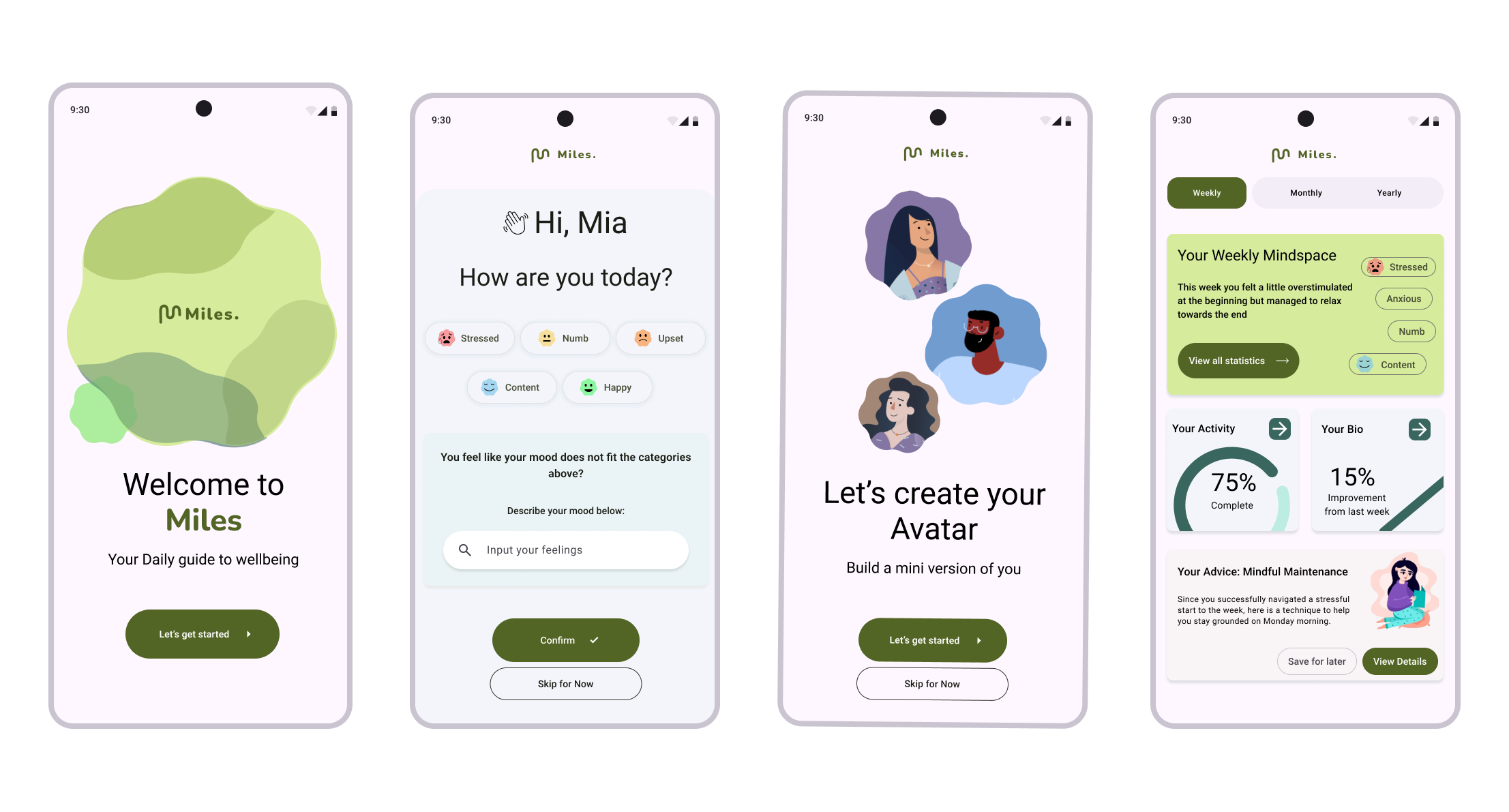
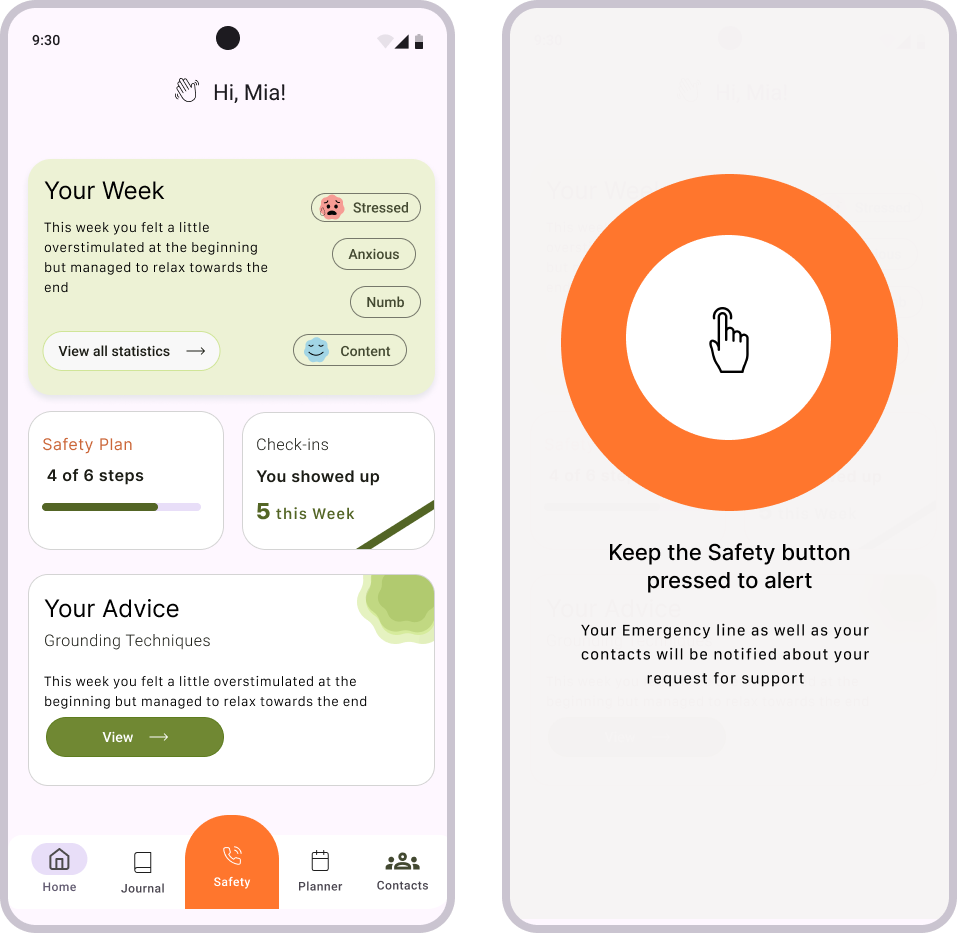
On Mobile
Purpose: Long-term management and deep reflection.
The mobile app manages the complex data tracking, safety planning, and secure communication needed by the professional/caregiver.
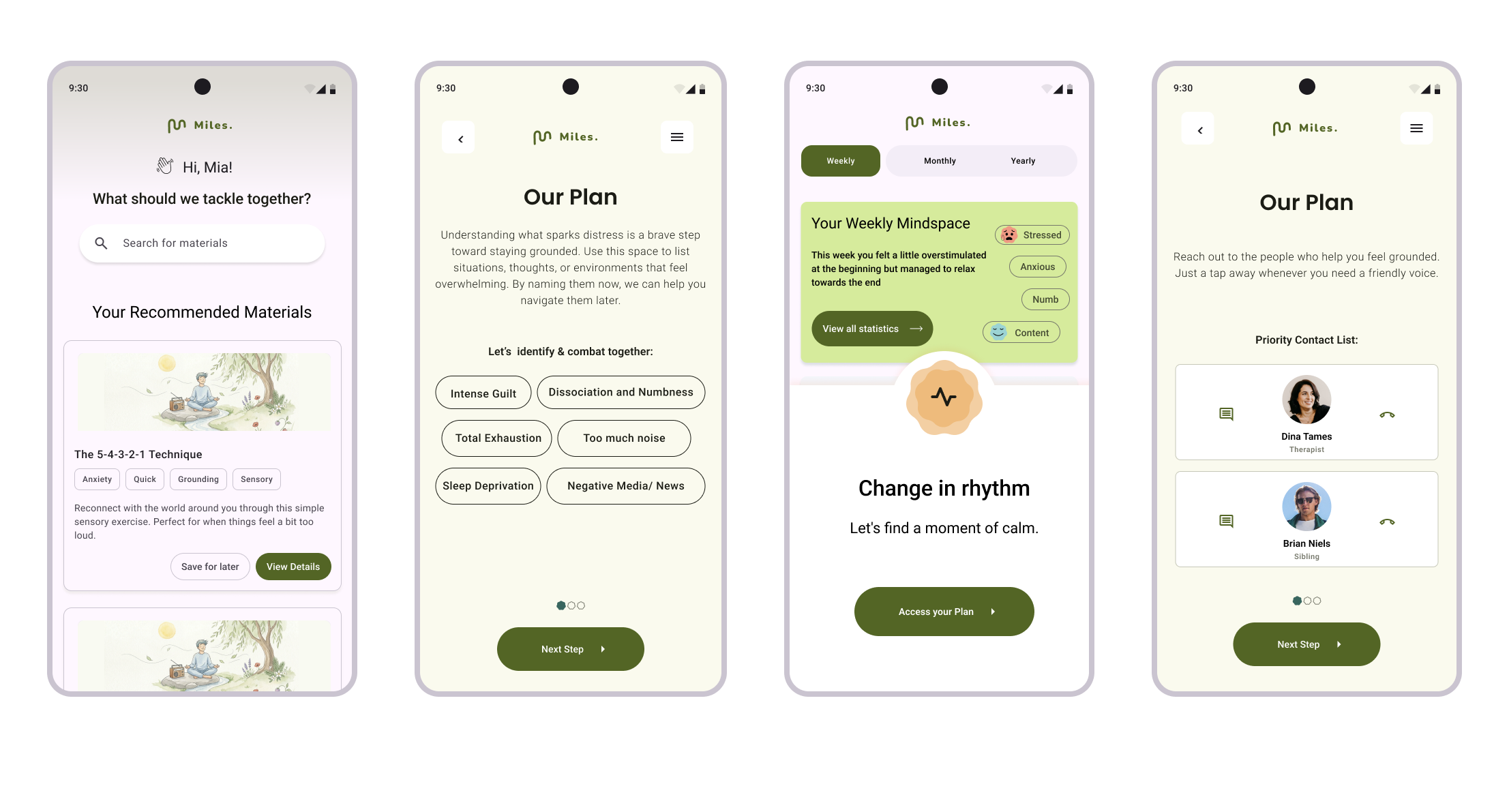
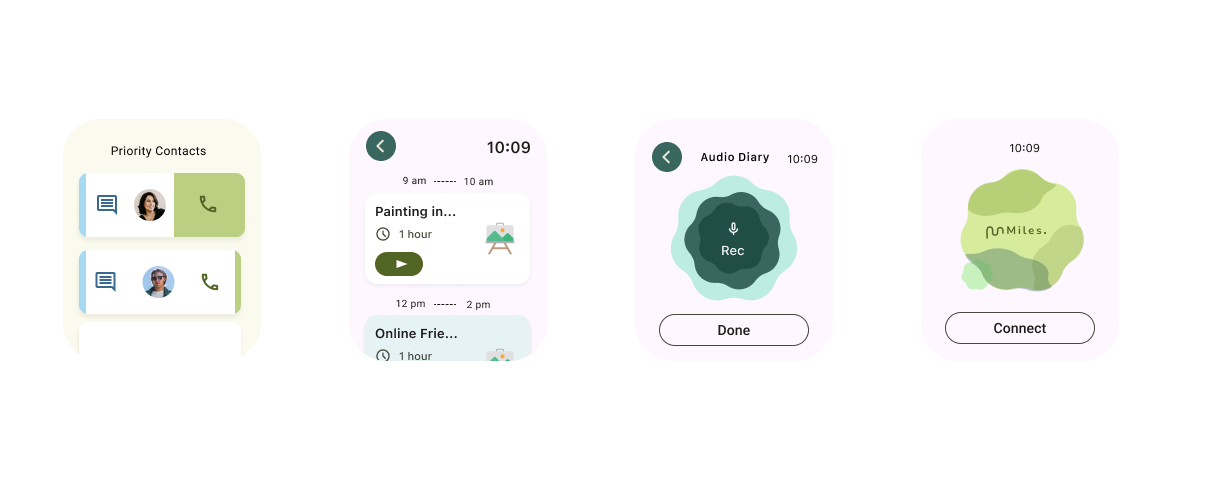
On Wearable
Purpose: Immediate grounding and emergency response.
The smartwatch interface is designed for immediate low-cognitive-load intervention.
Usability Testing
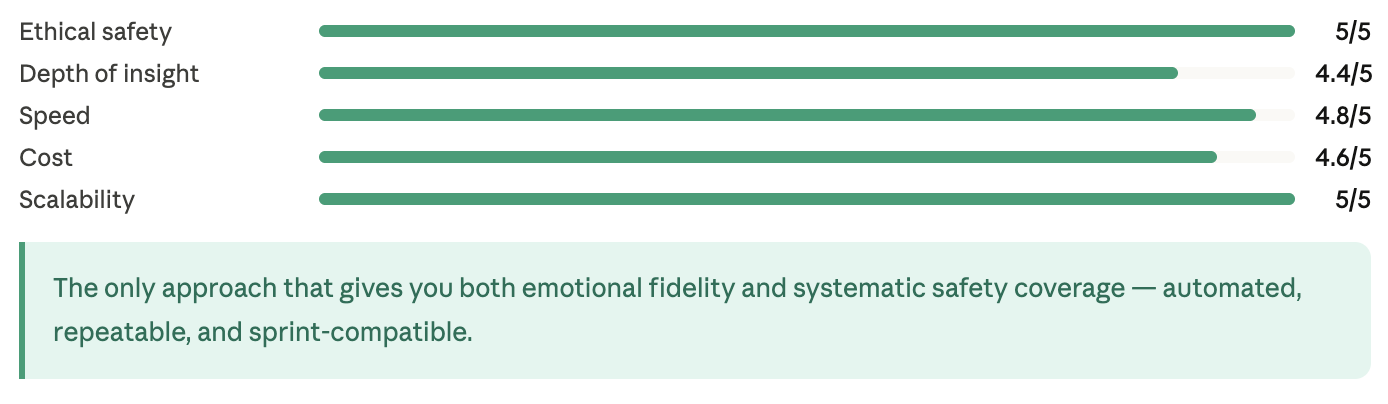
Round 1: Synthetic testing (AI simulation via tree-of-thought prompting)
I conducted “Synthetic AI Tasting as initial experimentation (early stage testing), before moving on to real user validation
Finding the best automated testing method - Tree-of-Thought
Using Tree-of-Thought prompting, I obtained the best testing setup that provided a reliable, insightful output, with a focus on the user’s potential perspective and safety.
Round 2: Real User testing with 5 participants (moderated sessions)
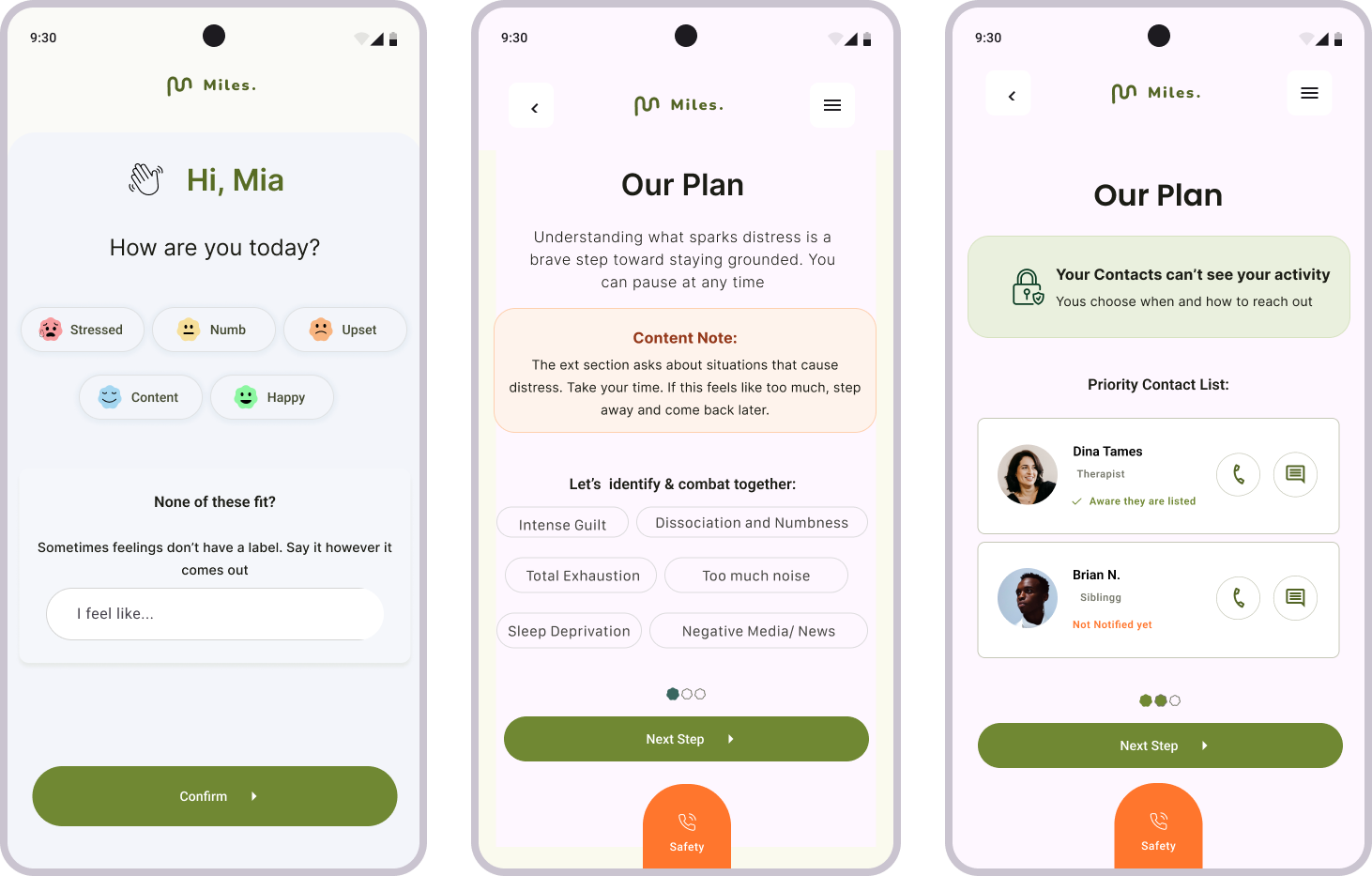
Feedback 2:
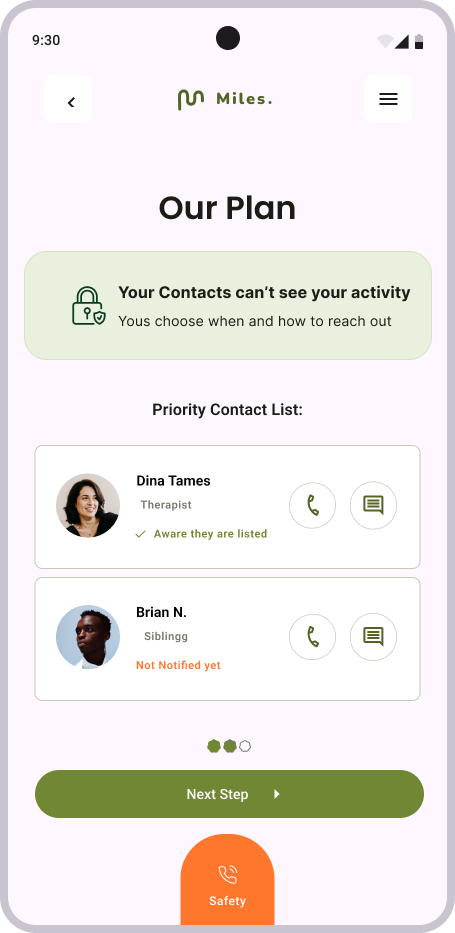
"I feel a flash of panic: does Brian know I added him? Can he see this? I don't call either of them. I close that screen."
Iteration:
Added relevant tags to each contact, offering the user reassurance on whether the respective person is notified about being on the priority list or not.
Synthetic (AI) Testing
Feedback 1:
"What I want and can't find: something that says if you are in crisis right now, tap here. A number. A chat. Anything that says you are not alone at 2 am."
Iteration:
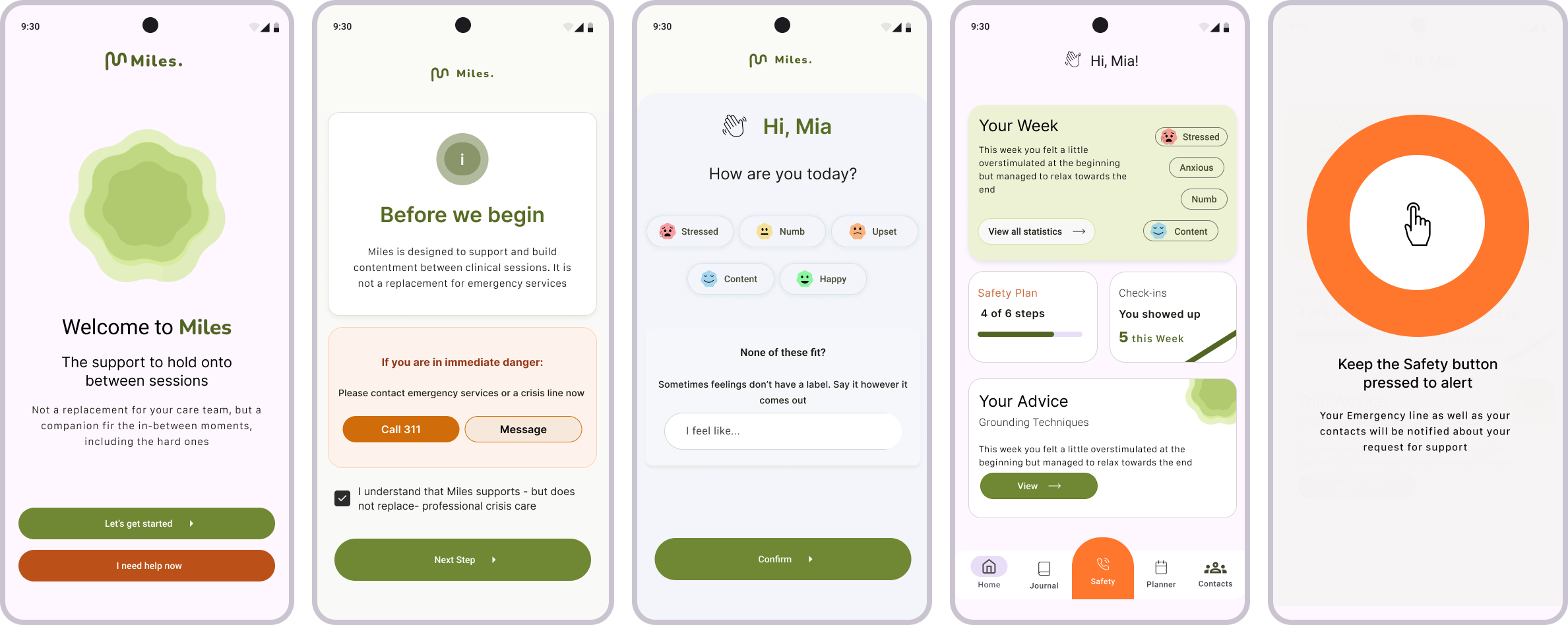
Added the “Safety” Call-to-Action directly in the navigation bar for easy access. In case of an emergency, the user has to keep the button pressed for help lines to be accessed. Once pressed, the screen will inform the user of this outcome.
Feedback 3:
"The 'Skip for now' button terrifies me. She will skip it on the hardest days. Those are exactly the days that matter."
Iteration:
As a clinical support app, I understood that daily check-ins are necessary, and the user has to interact as part of their crisis plan and prescription.
The Final Design
My Learnings
(Learnt Skills and Strategies)
What did I learn working on a complex crisis support application from the foundation upwards as a Ux Designer.
Learning to approach the target group with sensitivity while building a systematic digital environment

Designing for Multi-Platform Ecosystems:
The requirement for the Miles app to operate across a Samsung Galaxy smartwatch and mobile devices for dual users (patient and caregiver/professional) presented a complex system design challenge. This experience taught me that in high-stakes environments, the primary UX challenge is not aesthetic, but ensuring reliable synchronisation of critical data
Building trust through consideration:
From the manner in which I asked questions during the interviews to the information architecture and word choice in the app design, all proved to me how important is to be considerate to build trust.
Style Guide
Typography

Color Palette
